7 Practical Skills That Can Help You Succeed in the Workplace
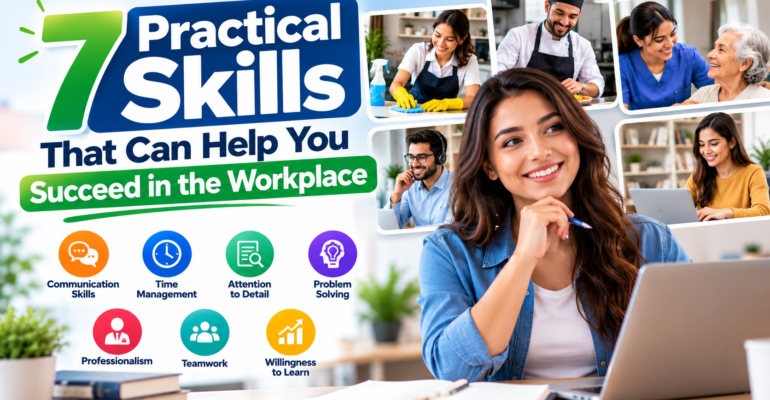

7 Practical Skills That Can Help You Succeed in the Workplace
Starting a new job is not only about having the right qualifications. In many workplaces, the way you communicate, organize your responsibilities, solve everyday problems, and work with others can be just as important.
These practical skills are useful across many careers—from cleaning and caregiving to hospitality, customer service, and remote work. The good news is that they can be learned and improved over time.
1. Communication Skills
Clear communication is one of the most useful workplace skills.
It means listening carefully, asking questions when something is unclear, speaking professionally, and sharing important information with the right people.
For example, a caregiver may need to communicate about a client’s daily needs, while a customer service representative may need to explain a solution clearly to a customer.
Good communication can help prevent misunderstandings and make everyday work easier.
2. Time Management
Most jobs involve several responsibilities during the day. Learning how to organize those responsibilities can help you work more efficiently.
A simple approach is to identify your most important tasks, estimate how much time they require, and complete them in a logical order.
For someone working in housekeeping, this might mean following a room-by-room cleaning process. For a virtual assistant, it could mean organizing emails, meetings, and administrative tasks according to priority.
3. Attention to Detail
Small details can make a big difference.
A cleaner may need to notice areas that are often missed. A restaurant employee may need to check an order carefully. A virtual assistant may need to review an email or document before sending it.
Developing attention to detail can help improve the quality and consistency of your work.
4. Problem-Solving
Not every workday goes exactly as planned.
A customer may have a complaint. A scheduled task may change. Equipment may not be available. You may receive a request you have never handled before.
Problem-solving means staying calm, understanding the situation, considering possible solutions, and knowing when to ask a supervisor or experienced colleague for help.
You do not need to know every answer immediately. Knowing how to approach a problem is a valuable skill itself.
5. Professionalism
Professionalism is reflected in everyday behavior.
Arriving on time, communicating respectfully, following workplace procedures, maintaining appropriate appearance and hygiene, and completing responsibilities carefully can all contribute to a professional reputation.
These habits matter whether you work in a client’s home, restaurant, office, healthcare-related environment, or remotely from your own home.
6. Teamwork
Even jobs that involve independent tasks usually require some level of cooperation.
Good teamwork involves respecting other people’s responsibilities, communicating clearly, helping when appropriate, and contributing to a positive working environment.
Being dependable can also make you a stronger team member. When people know they can rely on you to complete your responsibilities, working together becomes easier.
7. Willingness to Learn
Workplaces change.
New tools are introduced, procedures are updated, customer expectations evolve, and employees may be given new responsibilities.
Being willing to learn can help you adapt to these changes.
You do not have to master everything immediately. Asking questions, practicing new skills, learning from feedback, and continuing your education can help you improve throughout your career.
How Online Training Can Help
Practical workplace skills are developed through a combination of learning and real-world experience.
Online training can help you understand important concepts before you encounter them at work. You can learn about professional standards, common workplace situations, safety practices, communication, organization, and other career-related topics at your own pace.
The key is to take what you learn and practice applying it in realistic situations.
Keep Building Your Skills
Career development does not happen in a single day.
Every new skill you learn can become part of a stronger professional foundation. Start with the areas where you need the most improvement and continue building from there.
At Skill Ready Academy, our online courses are designed to introduce practical skills for real-world work environments across cleaning, caregiving, hospitality, customer service, remote work, and other career areas.
Explore our online courses and start building practical skills for your next career step.